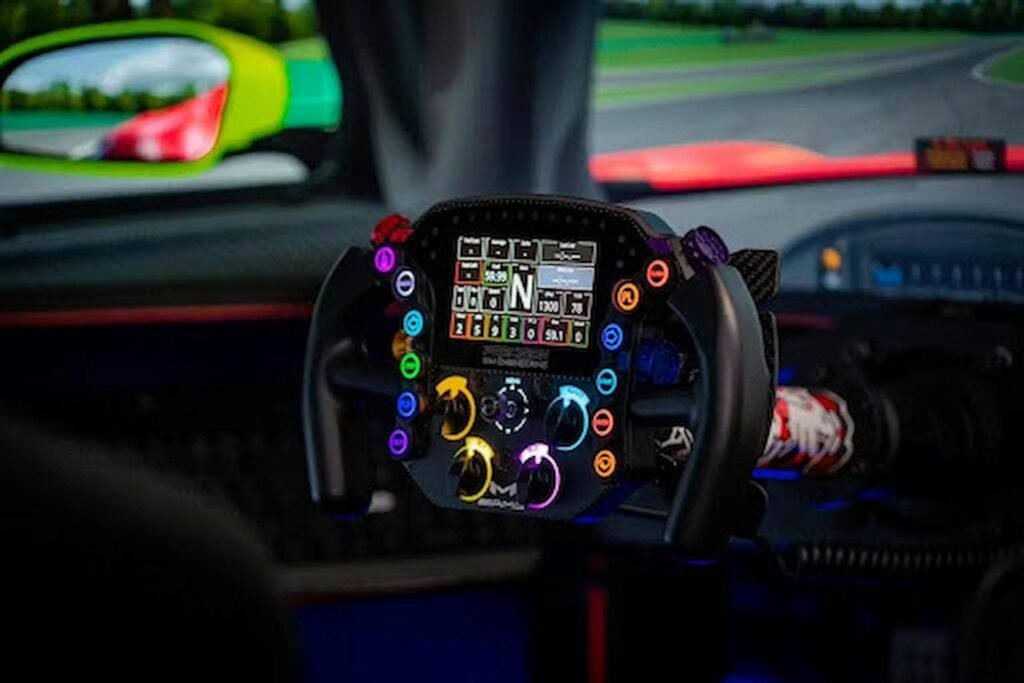
Sim racing has evolved from a niche hobby into a globally recognized form of digital motorsport, blending precision engineering, competitive intensity, and cutting-edge simulation technology. What began as a passion project for enthusiasts is now a serious arena where skill, strategy, and split-second decisions mirror real-world racing. From advanced hardware setups to structured competition ladders, the world of sim racing offers a deep, immersive experience that continues to redefine how drivers train, compete, and connect.
Sim racing, short for simulation racing, is a form of virtual motorsport that uses advanced software and specialised hardware to replicate real-world driving dynamics. Unlike casual racing games, sim racing places a strong emphasis on realism, precision, and skill development. As the discipline has matured, platforms like Sim Racer UK reflect its structured, performance-focused, and technically refined nature. Understanding sim racing requires looking beyond modern setups to explore its origins, technological evolution, and the core principles that define it. This article examines what sim racing truly is, how it started, and how it developed into a disciplined digital motorsport with global appeal.
What Is Sim Racing?
Sim racing is a digital motorsport discipline designed to simulate real driving behaviour as accurately as possible. It combines physics-based software with specialised input devices to mirror vehicle handling, track conditions, and driver response.
Core Characteristics of Sim Racing
Sim racing is defined by a commitment to realism rather than arcade-style entertainment.
-
Physics-Driven Driving
Vehicle behaviour is governed by complex physics models that account for grip, weight transfer, braking forces, and tyre response.
-
Precision Hardware Integration
Steering wheels, pedals, and seating positions are designed to deliver consistent input and feedback for accurate control.
-
Skill-Based Progression
Performance depends on technique, consistency, and understanding of driving fundamentals rather than shortcuts or boosts.
How Sim Racing Differs from Traditional Racing Games
| Aspect | Sim Racing | Traditional Racing Games |
| Core Purpose | Designed to replicate real-world driving behaviour with a strong emphasis on accuracy and realism | Designed primarily for entertainment, accessibility, and fast-paced gameplay |
| Handling Model | Uses advanced physics to simulate tyre grip, weight transfer, braking, and vehicle dynamics | Simplified handling that prioritises ease of control over realism |
| Learning Curve | Requires patience, practice, and technical understanding to improve performance | Allows quick progression with minimal technical knowledge |
| Player Progression | Skill develops through consistent practice and mastery of driving fundamentals | Progression often relies on in-game rewards, upgrades, or assists |
| Race Structure | Organised around structured rules, standards, and competitive frameworks similar to motorsport | Typically features casual races with flexible rules and arcade-style modes |
| Performance Expectation | Emphasises consistency, precision, and disciplined driving | Emphasises speed, spectacle, and immediate engagement |
The Early Origins of Sim Racing
Sim racing did not emerge overnight. Its roots can be traced to early advances in computing and a growing interest in realistic digital simulations. The first driving programs were technically limited, focusing on basic vehicle movement and simple track layouts due to hardware constraints. As computing power improved, developers were able to introduce more accurate physics, smoother controls, and greater visual detail, gradually increasing realism. Alongside these technical improvements, enthusiast communities played an important role in shaping the direction of development. Dedicated users consistently pushed for higher levels of authenticity, influencing how simulation software evolved into a more refined and technically driven form of digital motorsport.
Technological Evolution That Shaped Sim Racing
Technology has been central to the development of sim racing, with each advancement refining realism and deepening user engagement. Improvements in simulation software allowed developers to model mechanical behaviour and environmental variables with far greater accuracy, creating driving experiences that respond closely to real-world inputs. At the same time, hardware evolved to support this realism, with more precise steering resistance, refined pedal pressure, and improved seating ergonomics enabling better control and consistency. Visual and audio fidelity also advanced steadily, enhancing immersion and spatial awareness through clearer track detail, more accurate lighting, and responsive sound cues that support driver decision-making.
The Skills Required in Sim Racing
Sim racing is not casual entertainment. It demands measurable skills developed through structured practice.
Essential Competencies
-
Consistency
Maintaining stable lap times is more important than isolated fast performances.
-
Technical Awareness
Drivers must understand braking zones, steering input, and throttle control.
-
Mental Focus
Concentration and discipline play a significant role in sustained performance.
How Sim Racing Communities Developed
As realism increased, sim racing naturally moved towards more organised forms of participation. Structured leagues and scheduled events emerged to provide consistent rules, competitive standards, and a clear sense of progression. As competition became more demanding, coaching and development-focused services gained importance, helping drivers refine technique and build consistency. Performance analysis also became a standard part of the experience, with data review used to identify strengths, weaknesses, and areas for improvement. Midway through this evolution, platforms aligned with Sim Racer UK highlighted how structured support, equipment-focused guidance, and performance-driven approaches helped shape the modern sim racing environment.
Why Sim Racing Continues to Grow
Sim racing continues to grow because it balances accessibility with genuine depth. New participants can begin with relatively simple setups and build their skills gradually, progressing methodically as their confidence and understanding improve. Performance in sim racing is transparent, with improvements clearly measurable and repeatable, which makes progress both motivating and rewarding. In addition, the availability of structured improvement paths helps sustain long-term engagement. Clear routes for development, combined with realistic feedback and performance tracking, encourage ongoing participation and continual skill refinement rather than short-term or casual involvement.
Wrapping Up
Sim racing is best understood as a discipline rather than a pastime. It began as a technical experiment in early computing and evolved through advancements in software, hardware, and community organisation. Today, it stands as a skill-driven digital motorsport built on realism, precision, and continuous improvement. From physics-based simulations to structured participation, sim racing rewards methodical learning and disciplined execution. Platforms and services aligned with Sim Racer UK reflect this professional approach, focusing on development, equipment understanding, and performance refinement. As technology continues to advance, sim racing’s core principles remain unchanged: realism, consistency, and skill progression. For anyone seeking to understand what sim racing is and how it started, recognising its technical roots and disciplined nature provides the clearest perspective on why it continues to grow and command serious engagement.