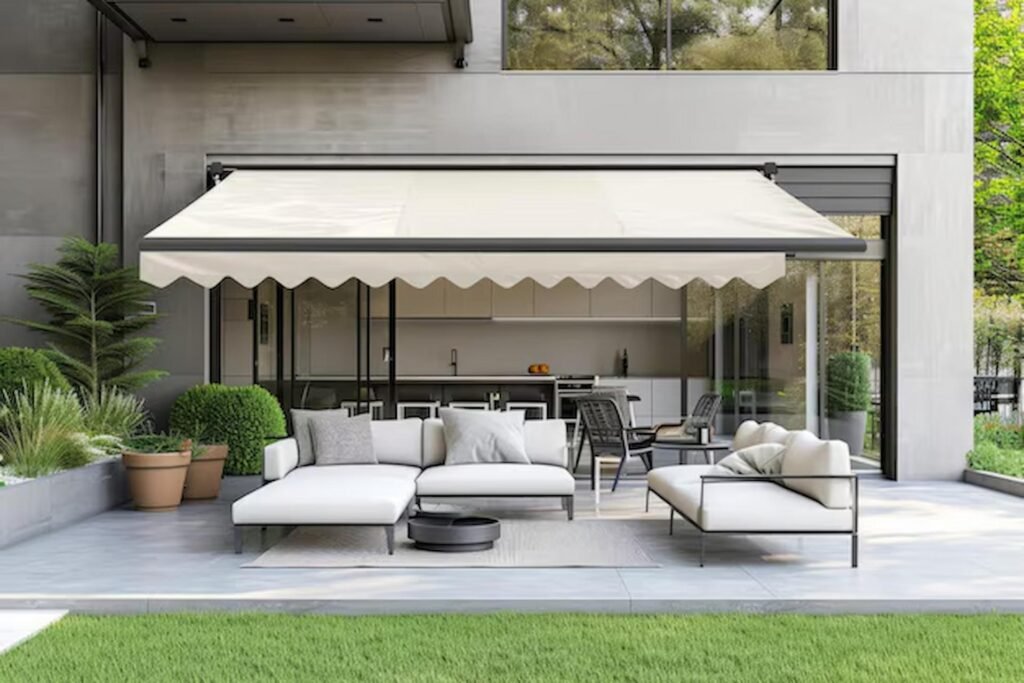
A well-designed awning can turn an exposed patio into a comfortable place for relaxing, dining, and entertaining. By controlling sunlight, sheltering against light rain, and supporting useful extras such as heating and lighting, it helps you enjoy the garden for longer periods across changing seasons without building a permanent extension.
Outdoor areas often sit unused when the weather becomes too hot, damp, bright, or cool. Installing garden awnings can change that by creating a flexible sheltered zone directly outside your home. A retractable design gives you control over shade and exposure, allowing the patio to respond to changing conditions throughout the day. With the right size, fabric, position, and optional features, an awning can make outdoor dining, quiet relaxation, and evening socialising more comfortable. It also creates a stronger connection between the house and garden without requiring the cost, disruption, or permanence of a conventional building extension or major alterations.
Creating a Natural Extension of Your Home
An awning transforms the space just outside your doors into a more usable part of your home. Instead of relying on perfect weather, the patio becomes suitable for everyday activities like dining, relaxing, or working outdoors.
A retractable design adds flexibility, allowing you to adjust shade as needed. With thoughtful placement, it also improves the flow between indoor and outdoor areas, creating extra living space without permanent construction.
Making Summer Days More Comfortable
Strong sunlight can make an uncovered patio uncomfortable during the warmest part of the day. An awning provides controlled shade, helping reduce glare and creating a cooler place to sit without closing the garden off completely. Quality outdoor fabrics can also provide useful protection from ultraviolet exposure, although sensible sun precautions remain important.
An extended awning may shade nearby windows and glazed doors, reducing the amount of direct solar heat entering adjoining rooms. This can make internal spaces feel more comfortable during hot weather. For the best summer performance, consider the direction your garden faces, the times when sunlight reaches the patio, and the projection needed to cover your main seating or dining area.
Keeping the Patio Useful During Light Rain
British weather can change quickly, and even a brief shower can disrupt outdoor plans. A suitable patio awning can provide shelter during light or moderate rain, helping keep the space usable.
Fabric, pitch, and installation affect how well rainwater is directed away, and it is important to know the difference between water-resistant and fully waterproof options.
Retracting the awning during severe weather helps protect it, while some motorised systems include rain sensors for added convenience.
Enjoying the Garden in Spring and Autumn
Spring and autumn can be pleasant, but cooler air, lower sunlight, and occasional rain may limit patio use. A well-positioned awning provides shelter, reduces glare, and keeps the space comfortable for dining or relaxing.
Use weather-resistant furniture, avoid overcrowding, and ensure enough space for the awning to operate. Store soft furnishings indoors if they are not suited to changing conditions.
Adding Warmth and Light for Longer Evenings
Garden awnings can enhance outdoor living beyond summer days. Integrated lighting keeps the space usable after sunset, while infrared heating adds comfort on cooler evenings.
These features make it easier to enjoy meals and social time outdoors for longer. Lighting should be soft and practical, and heating should focus on the seating area for efficient warmth.
Choosing Between Manual and Motorised Operation
Manual awnings offer simple control and suit occasional use, while motorised options make extending and retracting quicker and more convenient. Remote controls and wind sensors can add ease and protection, especially for larger systems. The best choice depends on your awning size, usage, budget, and preferred level of convenience.
Selecting the Right Size, Fabric, and Finish
An awning should provide enough coverage without looking oversized, so accurate measurements are important. A made-to-measure design can suit your patio layout and sunlight direction.
Fabric colour affects the overall look, with neutral tones offering a subtle finish and bolder options adding character. Choose durable, fade-resistant materials and corrosion-resistant components for long-term use. Professional installation helps ensure a proper fit and smooth operation.
Planning the Space Beneath the Awning
Arrange the sheltered patio based on how you plan to use it, whether for dining, relaxing, or entertaining. Choose furniture that fits comfortably and keep pathways clear to avoid a cramped feel.
Avoid placing tall items where they could interfere with the awning. Ensure lighting, heating, and electrical features are professionally installed and positioned correctly. A simple, well-planned layout makes the space safer and more comfortable to use year-round.
Supporting Indoor Comfort and Protecting Furnishings
An awning can also improve indoor comfort by reducing strong sunlight through windows and doors, helping control glare and keep rooms cooler. It may protect flooring, furniture, and fabrics from sun exposure, while also shielding outdoor seating from light rain. A retractable design lets you adjust coverage as needed for better control.
Caring for Your Awning Through the Seasons
Regular care keeps an awning looking good and working well. Gently remove dust and debris, then clean the fabric using mild soap and water, avoiding harsh chemicals.
Make sure the fabric is fully dry before retracting it to prevent mold. Check the arms and fixings occasionally, and retract the awning during strong winds or heavy weather. Seek professional help if it becomes damaged or difficult to use.
Why Professional Installation Matters
An awning’s performance depends on proper sizing, positioning, and secure installation. Poor fitting can affect stability, drainage, and smooth operation.
A professional installer ensures accurate measurements, correct placement, and reliable performance. Expert guidance is especially important when adding motorisation, sensors, lighting, or heating to ensure everything works safely and effectively.
Conclusion
A patio becomes more useful when it adapts to changing weather instead of relying on a few ideal days. The right awning offers adjustable shade, shelter, and a smooth link between indoor and outdoor spaces. Features like motorised controls, sensors, lighting, and heating can improve comfort across seasons, while proper sizing and installation ensure reliability. Regular care also helps maintain performance. Before choosing garden awnings, consider how you use the space, the sunlight it receives, and the features that will best suit your needs.